KUMA International
Sarajevo, 2025
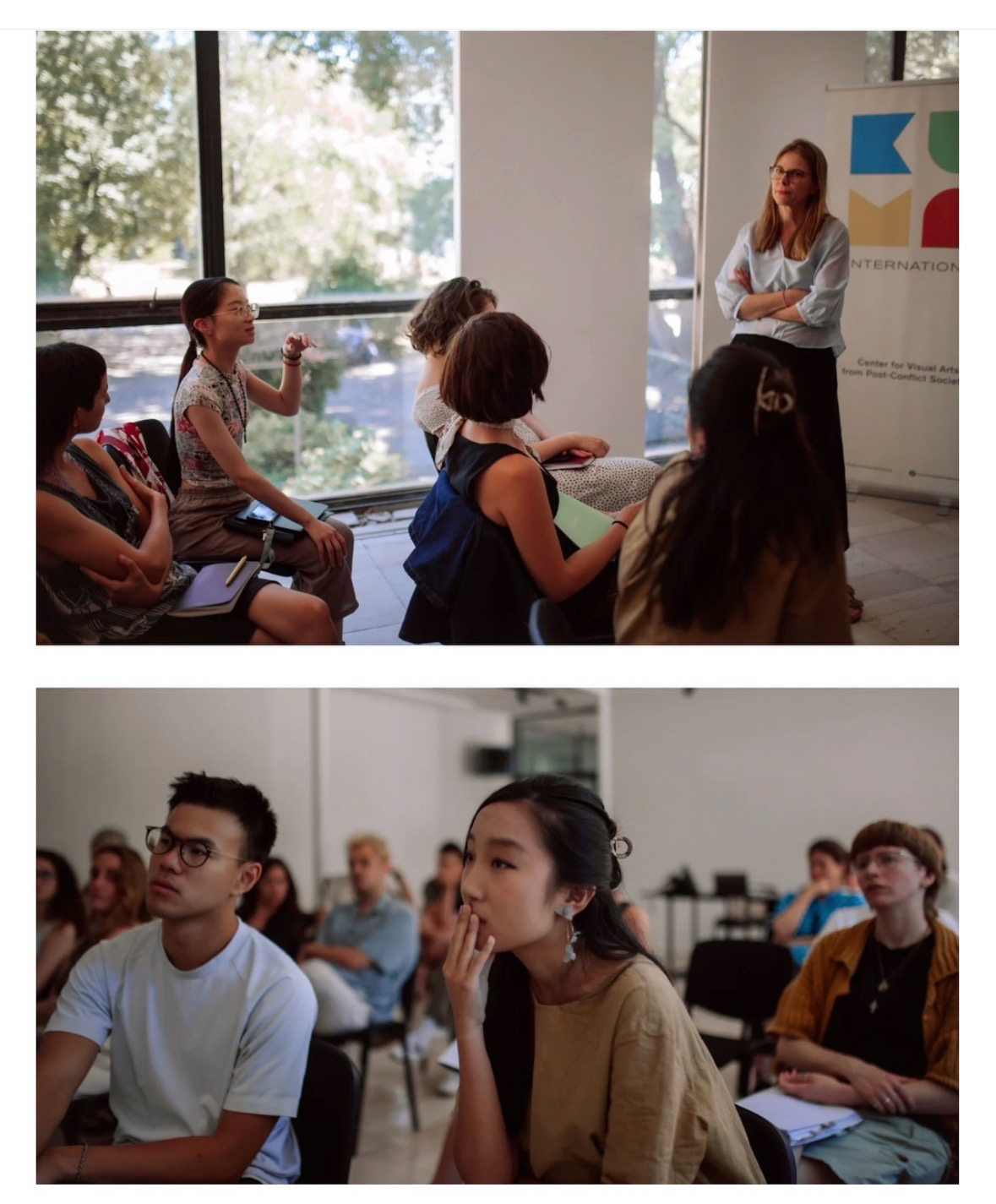
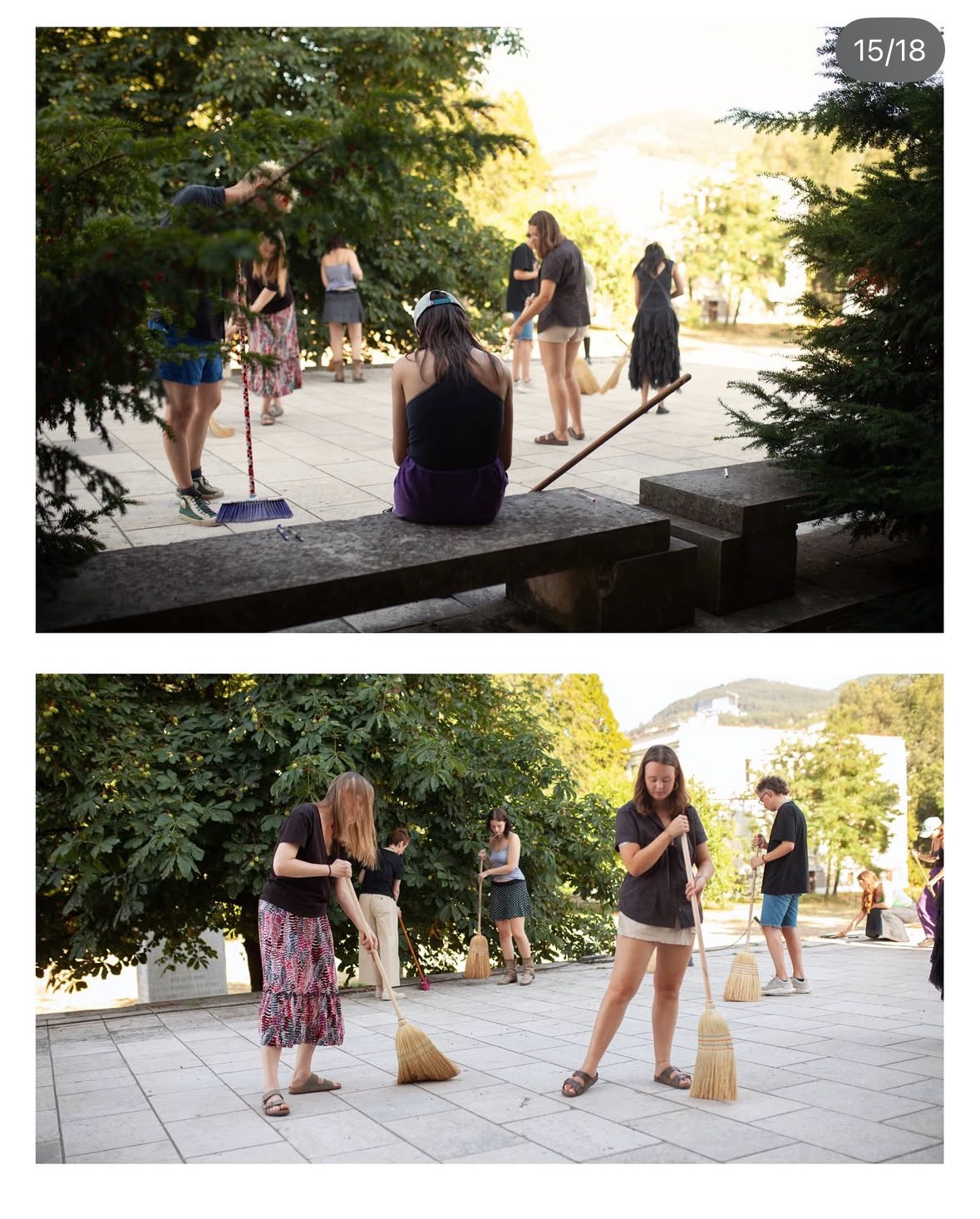
"The 8th edition of the Kuma International Summer School—our unique program dedicated to exploring contemporary art practices created in the context of conflict and trauma—brought together participants, artists, and scholars from across the world to commemorate the 30th anniversary of the Srebrenica genocide and the end of the war in Bosnia and Herzegovina. Curated this year by Professor Stephenie Young from Salem State University, the program examined the impact of Bosnia’s violent past alongside its current social and political landscape, with a particular focus on local artistic aesthetics, visual narratives, and cultural discourse—while also drawing connections to similar dynamics in other regions affected by war.
Building on the experience of the previous seven editions, the school explored how personal and collective memories shape narratives of war, exile, survival, and reconciliation.
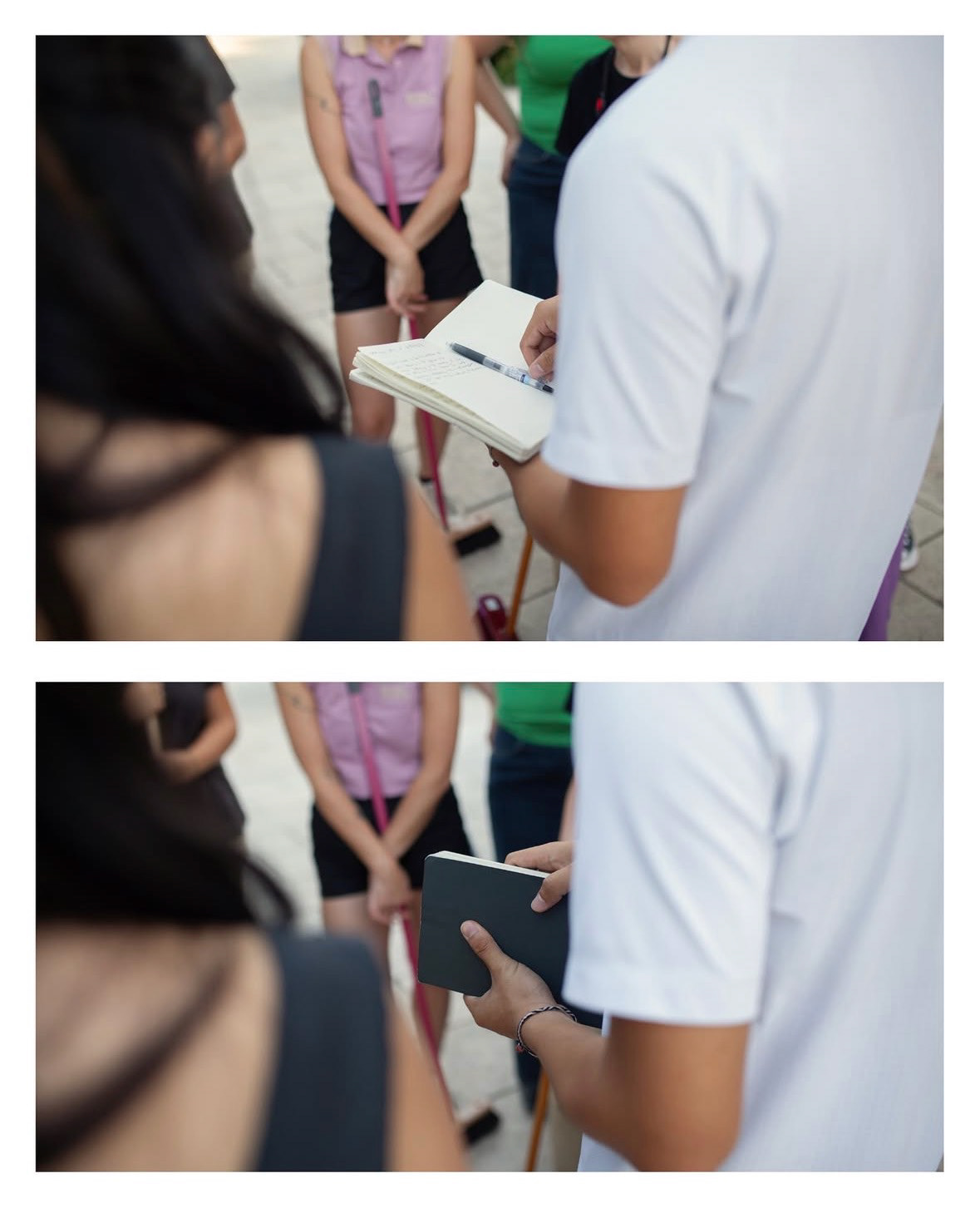
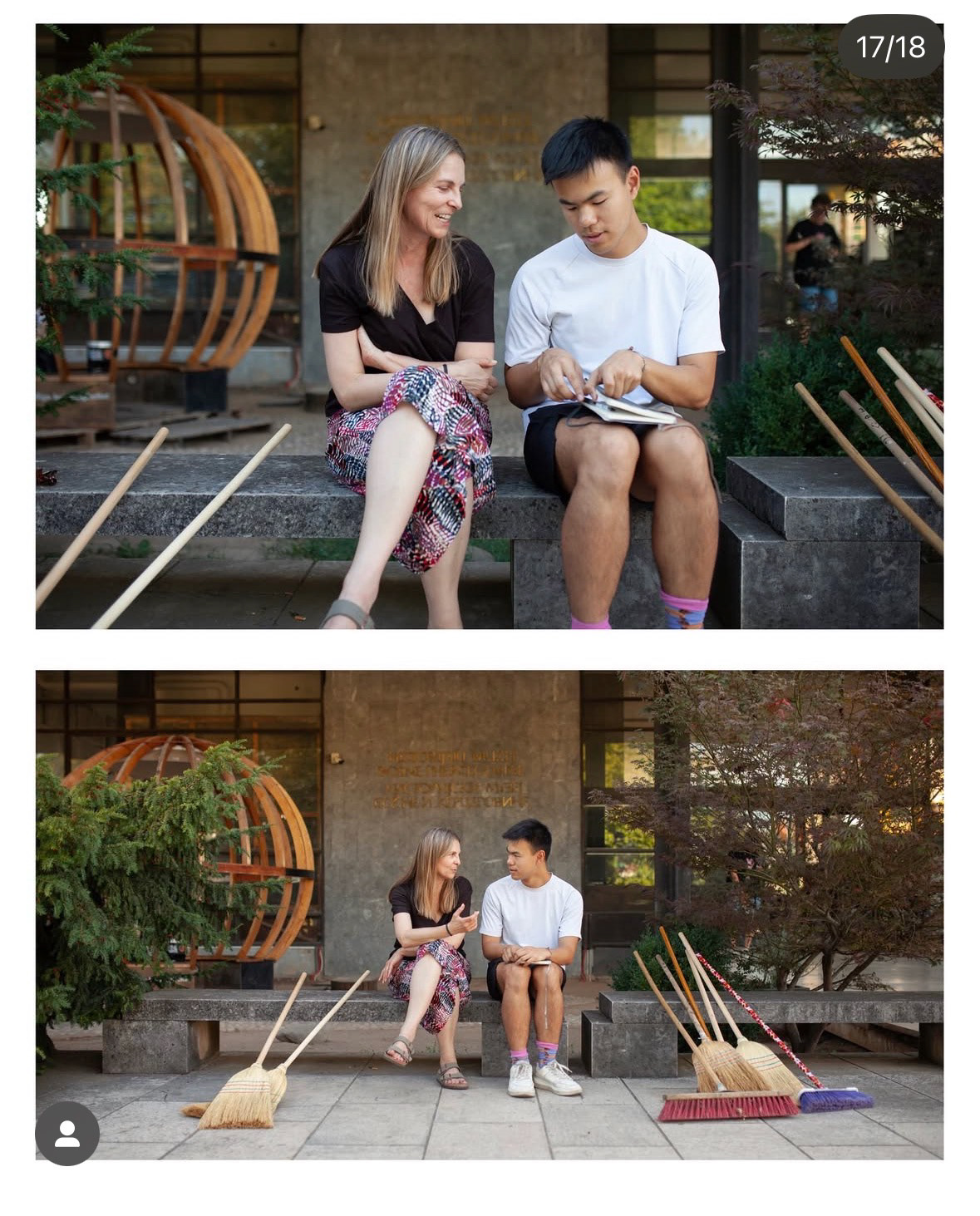
Throughout the week, the program featured lectures, conversations, mentorship, and artistic interventions by scholars and practitioners including Lauren Walsh, Velibor Božović, Giulia Casartelli, Emina Zoletić, Velma Babić, Ana Čvorović, Hariz Halilovich, Isak, Ado Hasanović, Vladimir Miladinović, Mladen Miljanović, Camilla De Maffei, among others. Their contributions opened space to reflect on intergenerational trauma, migration and identity, women’s overlooked role in war, memory embodied in objects, and the politics of monuments and archives.
The Summer School concluded with powerful sessions that underscored how art can hold space for grief, remembrance, and transformation. Alongside the lectures, collective moments—from music and film screenings to collaborative performances—reinforced the sense of connection that grew among participants. In the symbolic setting of the Historical Museum of Bosnia and Herzegovina, artists, researchers, and participants from different countries came together not only to study memory, but to build a community of listening, care, and resistance."
AusArten
München, 2024
"Was bleibt im Körper, wenn eine Generation im Krieg verloren geht? Und was passiert, wenn Kunst dort spricht, wo Sprache versagt?
Velma Babić, 1970 in Hamburg geboren, wuchs ab 1977 in Banja Luka im damaligen Jugoslawien auf. Die Kriege der 1990er-Jahre und der Verlust einer ganzen Generation prägten ihre Biografie – und ihre künstlerische Arbeit bis heute.
In ihrer künstlerischen und akademischen Arbeit setzt sich Velma Babić mit gesellschaftlichem Zusammenbruch, Identität und Erinnerung auseinander. Sie erforscht, wie Trauma in Körpern, Bildern und Erzählungen weiterwirkt und fand nach ihrem Studium an der LMU München sowie Aufenthalten in Kolumbien und den USA in Fotografie und Malerei ihre zentralen Ausdrucksformen.
Velma Babić nutzt ihren eigenen Körper als künstlerisches Medium, um persönliche wie kollektive Erfahrungen des Krieges in Jugoslawien zu verarbeiten. Ihre Arbeiten verhandeln Identität, Verletzlichkeit und die Rolle von Frauen in kriegerischen Kontexten. Kunst wird dabei nicht nur Ausdruck von Schmerz, sondern ein Akt der Selbstermächtigung. →
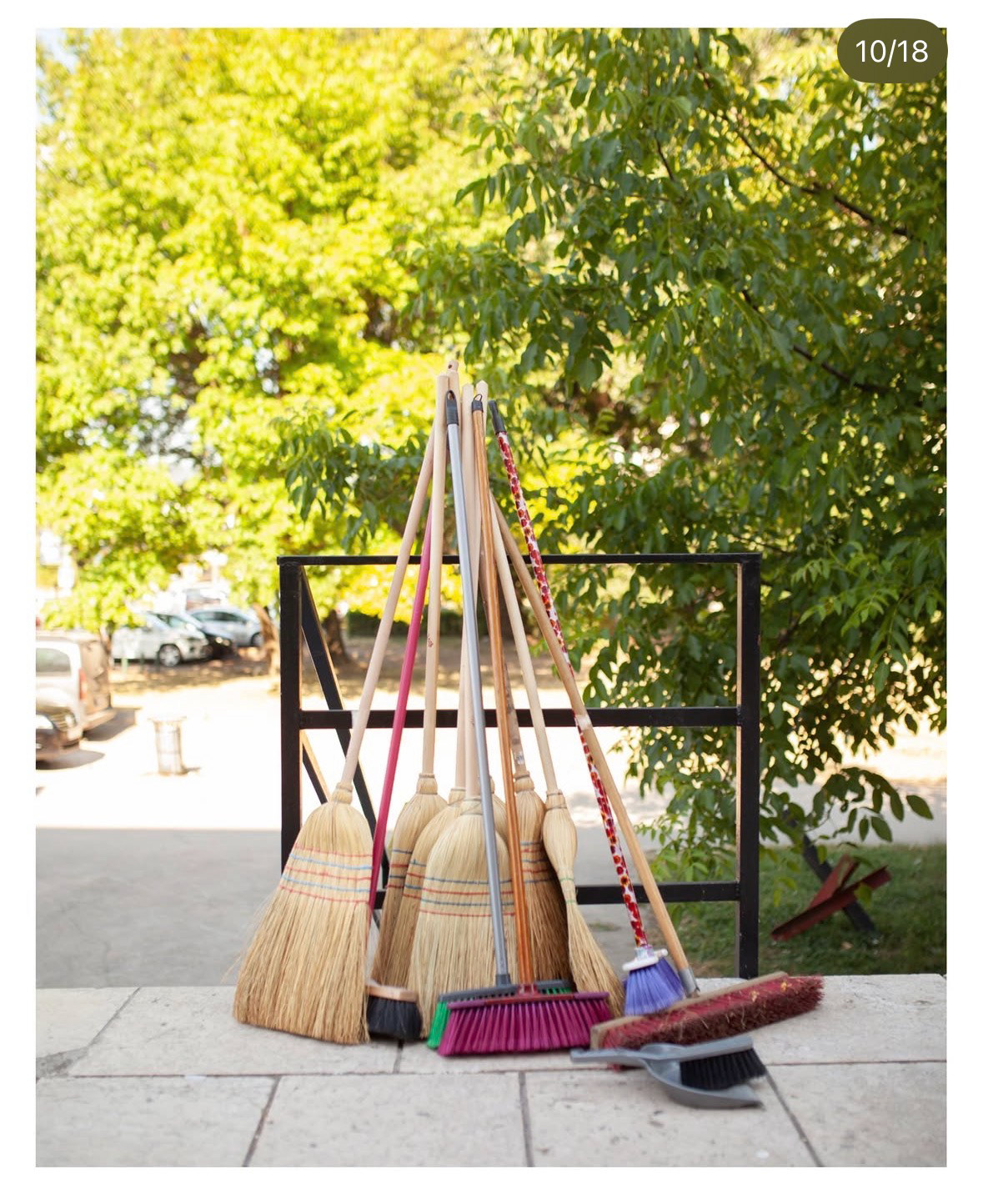
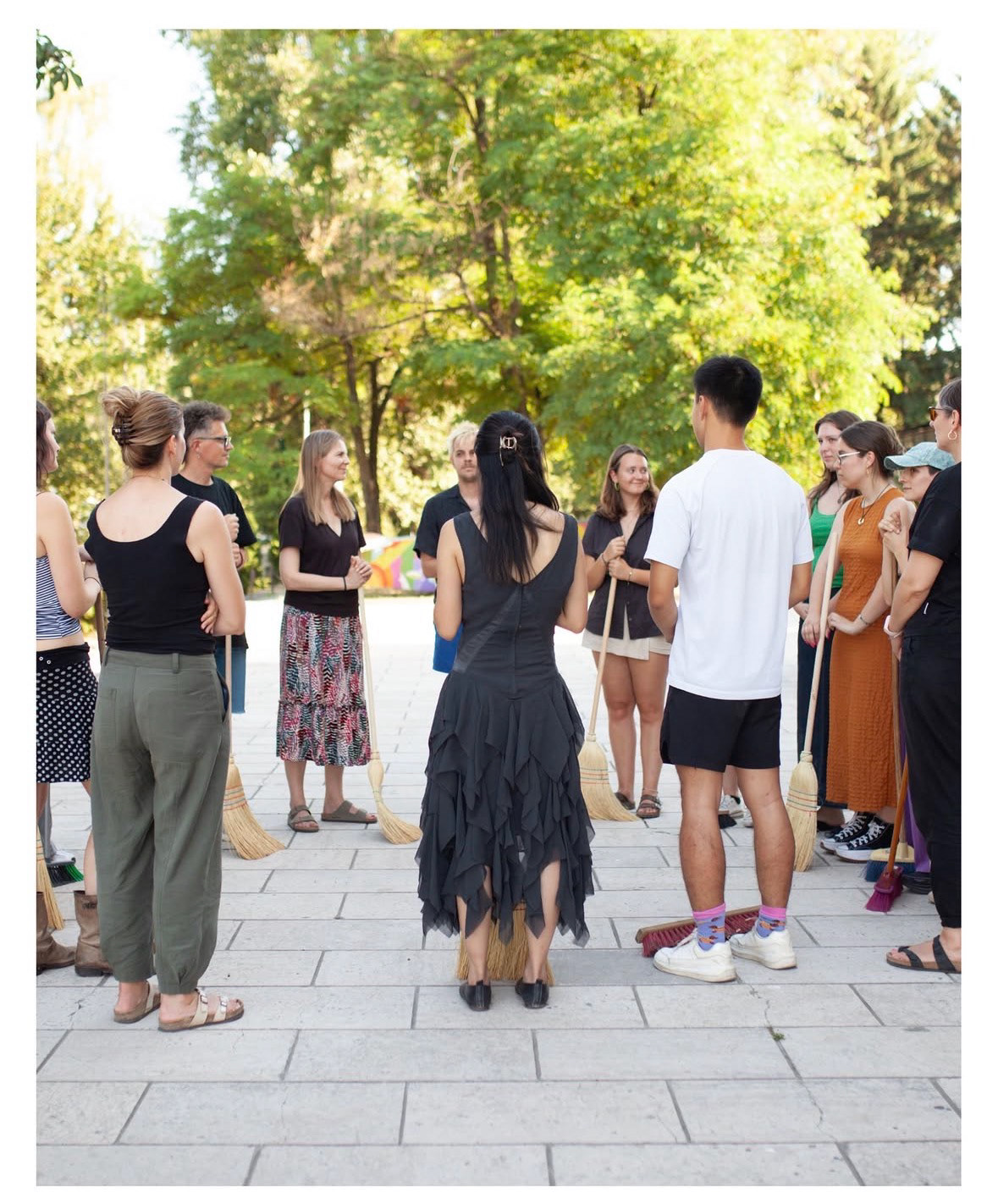
Im Rahmen des ausARTen Festivals „Perspektivwechsel“ 2024 und ihrer Ausstellung wurde diese Haltung besonders spürbar. Die Video-Performance „Cleaning“ machte Trauma sichtbar – als Teil einer Geschichte, die weitererzählt werden muss. Velma Babić lebt und arbeitet heute zwischen München und Sarajevo.
Im Video haben wir sie gefragt:
Was bedeutet Kunst für sie – warum ist Sichtbarkeit dort so wichtig, wo Trauma, Krieg und Migration tiefe Spuren hinterlassen haben, und weshalb braucht es offene Räume wie ausARTen, in denen Kunst, Diskurs und Begegnung frei stattfinden können?“
Was bedeutet Kunst für sie – warum ist Sichtbarkeit dort so wichtig, wo Trauma, Krieg und Migration tiefe Spuren hinterlassen haben, und weshalb braucht es offene Räume wie ausARTen, in denen Kunst, Diskurs und Begegnung frei stattfinden können?“
———
"Perspektivwechsel" - Interview
https://ausarten.org/
Benefit Art Auktion STO TE NEMA - Gallery of Contemporary Art Manifesto
Sarajevo, 2023
The ŠTO TE NEMA organization uses art, education, and activism as tools for individual and collective healing, striving for a world without genocide. The recently formed non-profit organization based in New York and Sarajevo grew out of a 15-year old public art project dedicated to remembrance of the Srebrenica genocide that traveled the world from 2006 to 2020 as a participatory nomadic monument. This year, we are excited to collaborate with the Gallery of Contemporary Art Manifesto in Sarajevo to present our first art auction benefiting the ŠTO TE NEMA non-profit organization. This auction has gathered some of the most prominent and world renowned artists from the region as well as young artists who are at the beginning of their promising art careers. We hope that you will recognize the solidarity of 30 artists who have generously donated their artworks, and the importance of our work.
All profits from the sales of the artworks will provide critical support for ŠTO TE NEMA’s educational and public programs to be held free of charge across Bosnia and Herzegovina next year. Additional support for the benefit art auction is provided by Kuma International.
With gratitude,
Aida Šehović, founder and director
Artists participating in the benefit auction are: Adela Jušić, Adna Muslija, Adnan Suljkanović, Adnan Šopović, Aida Šehović, Alma Gačanin, Amel Bešlagić, Amina Ahmetagić, Amina Horozić, Armin Durgut, Arnela Mahmutović, Benjamin Čengić, Bojan Stojčić, Darija Radaković, Enes Žuljević, Enrico Dagnino, Haris Gusinac, Ismar Čirkinagić, Jelena Fužinato, José Antonio Sánchez Manzano, Kasja Jerlagić, Kemil Bekteši, Lala Raščić, Mehmed Mahmutović, Mila Panić, Paul Lowe, Saša Tatić, Šejla Kamerić, Velma Babić, Ziyah Gafić. →
"Velma Babić was born in Germany and raised in former Yugoslavia, where she witnessed the start of the war at the beginning of the ‘90s. Eventually, she fled to Germany where she later graduated in Slavic and German Literature with a Master’s degree from the LMU Munich. During her time abroad in Colombia and the United States, she dedicated herself intensively to photography, being both the photographer and the performing female subject. Her interest in the relationship of photography to both literature and performance is a fertile moment to explore the meaning of identity and home, including her gender as a surface for interpretation around those topics.
Velma Babić has been exhibiting in museums and galleries of contemporary art in Colombia, Serbia, Bosnia and Herzegovina, and Germany. Currently, she lives in Munich, Germany. She has another domicile in Sarajevo, where she is a regular lecturer at the summer school led by Kuma International, Center for Visual Arts from Post-Conflict Societies."
Düsseldorf Cologne Open Gallery 2022 - Contemporary Art from South-East Europe
Cologne, 2022
"Velma Babić’s most representative works are exploring four main topics: identity, migration as well as trauma and the female body. The photographer is originally from Bosnia and Herzegovina, a country where there remains a good deal of tension between individual and collective memories as people still lack control over their historical narrative. She belongs to the generation from the 1970s in former Yugoslavia who was sacrificed during the war, the victim of tragic events: her youth and future perspective were brutally interrupted for long, while others lost their lives. The experience of the war informs her photographic practice that explore her fragmented identity through the genre of self-portrait in the context of war, migration, forced displacement and ultimately, the vulnerable human condition.
In her body of work, highly influenced by the relationship between photography, literature and performance, she uses different props and techniques such as masks, mirrors, collages and specific camera settings to highlight a feeling of alienation which refers to the alienating experience of being detached from one’s homeland and the simultaneous experience of being a migrant. Looking at the generation of female artists since the 1970s, she was inspired to use the physical body as a medium, as living sculpture or canvas, resulting in direct confrontation between the artist and the audience. →
Her photographs often have an oniric nuance, where trauma and memory suppression are lingering. There is also ambiguity, vagueness, the depiction of a surrealist world where the artist’s identity often disappears to invite the viewer to project their own self. In her photographs, she is author and subject at the same time. As she affirms, “involving the own subject into a medium is providing a distance from the individual experience of its creator. My body on the picture could be considered as an avatar with the task to visualise hidden structures beyond my own gaze and beyond the gaze of society”. Allowing the artist to deconstruct her identity, reconstruct her memories and rediscover her own voice, photography contributes to the process of trying to feel whole again, to make sense of her
feelings of alienation and foreignness. On stage, she appears in control of the narrative, challenging the female identity, perpetually subjected to the male gaze, and emerging from a position of victimhood to one where she tries to regain agency over her life. “Memory is not an instrument for exploring the past, but a theatre in which the past takes place”, points out Walter Benjamin. The artist’s photographs become a theatre stage, a safe space for a cathartic process for the purification and purging of emotions that results in renewal and restoration, both for the author and the viewer. At the same time, the performative act of memory in her work testifies to the exhausting inability to evoke anything more than a trace of the subject depicted.“
———
Dr. Claudia Zini is an Italian art historian and curator focusing her professional interests on visual arts dealing with the aftermath of war and violence. She holds a PhD degree from the Courtauld Institute of Art in London. In 2019 she was one of the curators of the Pavilion of Bosnia and Herzegovina at the Venice Biennale.
"Contemporary Refresh" - Gallery Brodac
2016, Sarajevo, Bosnia and Herzegovina
"Artists: Pierre Courtin, Nina Komel, Dzenan Hadžihasanović, Saša Tatić, Edo Vejselović, Selma Selman, Velma Babić, Džejlana Pašić, Alma Gačanin, Nikola Kekerović, Emir Mutevelić, Mila Panić, Sunita Fisić, Amir Čatić, Esma Hajrić, Amer Dorić, Adela Jušić, Zlatan Hadžifejzović, Nardina Zubanović, Vanja Solaković, Lana Čmajčanin
"The main goal of this exhibition is to attract new viewers into the contemporary art scene of Bosnia and Herzegovina by presenting the best and the latest contemporary Bosnian artworks. During the summer Sarajevo is one of the main stations for tourists and visitors what makes it the ultimate place for art of Sarajevo.
This Gallery is at its own beginning and in its short history it has already been one of the most interesting art places in Sarajevo. Through creating, exhibiting and promoting the local artists Brodac has its intention to become the center of contemporary art scene from Sarajevo offering different and valuable things to all of the interested individuals and groups."
"Abrahadabra, el ritual de lo habitual" - Museo de Arte Contemporáneo - MAC
ArtNexus, 2015, Bogotá, Colombia
"El Museo de Arte Contemporáneo de Bogotá presenta hasta el 30 de agosto “Abrahadabra, el ritual de lo habitual”, exposición que incluye el trabajo de veinte artistas de Venezuela, Brasil, Alemania y Colombia.
La exposición “Abrahadabra, el ritual de lo habitual”, curada por Juan David Quintero y Santiago Rodríguez, parte de la mirada que manifiestan, a través de diferentes técnicas como la pintura, el video y la fotografía, artistas de diferentes países con respecto al lado supersticioso, sobrenatural y místico que tiene el ser humano.
Al respecto de Abrahadabra, Juan David Quintero, curador de la muestra y del MAC, comenta: “las imágenes, los sonidos y los objetos siempre han estado ligados, de diversas maneras, al universo humano por medio del ritual, pero por sobre todas las cosas como herramienta para acceder a nuestros deseos, de los más anodinos y evidentes a los más misteriosos y ocultos”.
Para los curadores de la muestra, los rituales cumplen múltiples funciones; ya sean de “veneración de deidades, rechazo de fuerzas negativas o malignas, recordatorio de momentos especiales, conectan con los seres que ya no habitan el mundo material, logran el control del cuerpo y de los placeres sexuales, incluso, hasta levantar muertos de sus tumbas. De esta forma, la magia y sus procesos, al igual que el arte, transforman, cambian, mutan y operan a través de símbolos, siendo en la vida diaria donde pueden desarrollar todo su poder”.
Los artistas que participan son: Luiza Prado (Brasil), Fabio Stachi (Brasil), Edouard Fraipont (Brasil), Verónica Giraldo (Colombia), David Gómez (Colombia), Sandra Rengifo (Colombia), Pablo Adarme (Colombia), María Lucía Díaz (Colombia), Alicia Caldera (Venezuela), Iván Chacón (Colombia), Velma Babic (Alemania), Adriana Marmorek (Colombia), Leticia Zica (Brasil), Ladyzunga (Colombia), Andrés Moreno Hoffmann (Colombia), Edinson Quiñónez (Colombia), Sebastián Bejarano (Colombia), Karen Aune (Brasil), Leo Carreño (Colombia), Germán Sanchez (Colombia)."
Alejandra Bejarano Tovar, Bogotá, 2012
"Las paredes en colores, un espacio inusitado. Del centro sobresale una réplica del Niño Dios que recibe a graneros y visitantes. A la derecha, un mural de letras talladas en madera que dice «Plazarte», advierte a sus visitantes que se encuentran en medio de la fusión perfecta de arte, cultura y comercio. Están en el teatro de los sueños: el único teatro de Latinoamérica que funciona dentro de una plaza de mercado.
Su creador es Santiago Martínez, un dramaturgo que ha dedicado gran parte de su vida a las Artes Escénicas y que encontró un espacio inusual para vivir sobre las tablas. «Se llama así porque yo trabajé en Alemania durante siete años en un grupo que se llama ‘Träume Theater Salomé’, que quiere decir ‘Teatro de Sueños’. Este giró por toda Europa y todavía existe. Cuando llegué a Colombia, vine con la ilusión de hacer mi propia versión».
La Plaza de La Concordia fue como una aparición para Santiago. Reunía todo el romanticismo y la mística que se necesita en las tablas. De su idea, hacen parte actores y directores, como Álvaro Rodríguez y su compañía Alcarabán; Nora Ayala e Iván Zapata y Rafael Giraldo -actores de teatro con experiencia-. Ellos son los encargados de dirigir las obras que allí se presentan y cuya entrada oscila entre los cinco mil y siete mil pesos.
Los artistas Pilar Otálora y Velma Babic se encargan de darle otra cara al espacio. Talleres y charlas atraen a turistas, actores y vecinos de la localidad, que entre los olores del mercado ocupan los 120 puestos de madera.
Los niños y niñas también tienen un lugar; además de las presentaciones de títeres, cuentan con exposiciones de arte infantil y lectura de poemas. Los jóvenes realizan actividades con saltimbanquis, poesía y escritura. Los comerciantes, por su parte, preparan la tradicional degustación del chocolate santafereño.
«La idea de nosotros con todas las actividades culturales es que venga la gente a ver una obra de teatro o a ver una de títeres; que deje la lista con uno de los graneros para que le hagan el mercado mientras está viendo una obra de teatro. Ojalá que en todas las plazas hubiera teatro», dice Martínez.
El Arte y la Cultura tienen una cita los viernes y los sábados en la Plaza Distrital del Mercado de La Concordia."