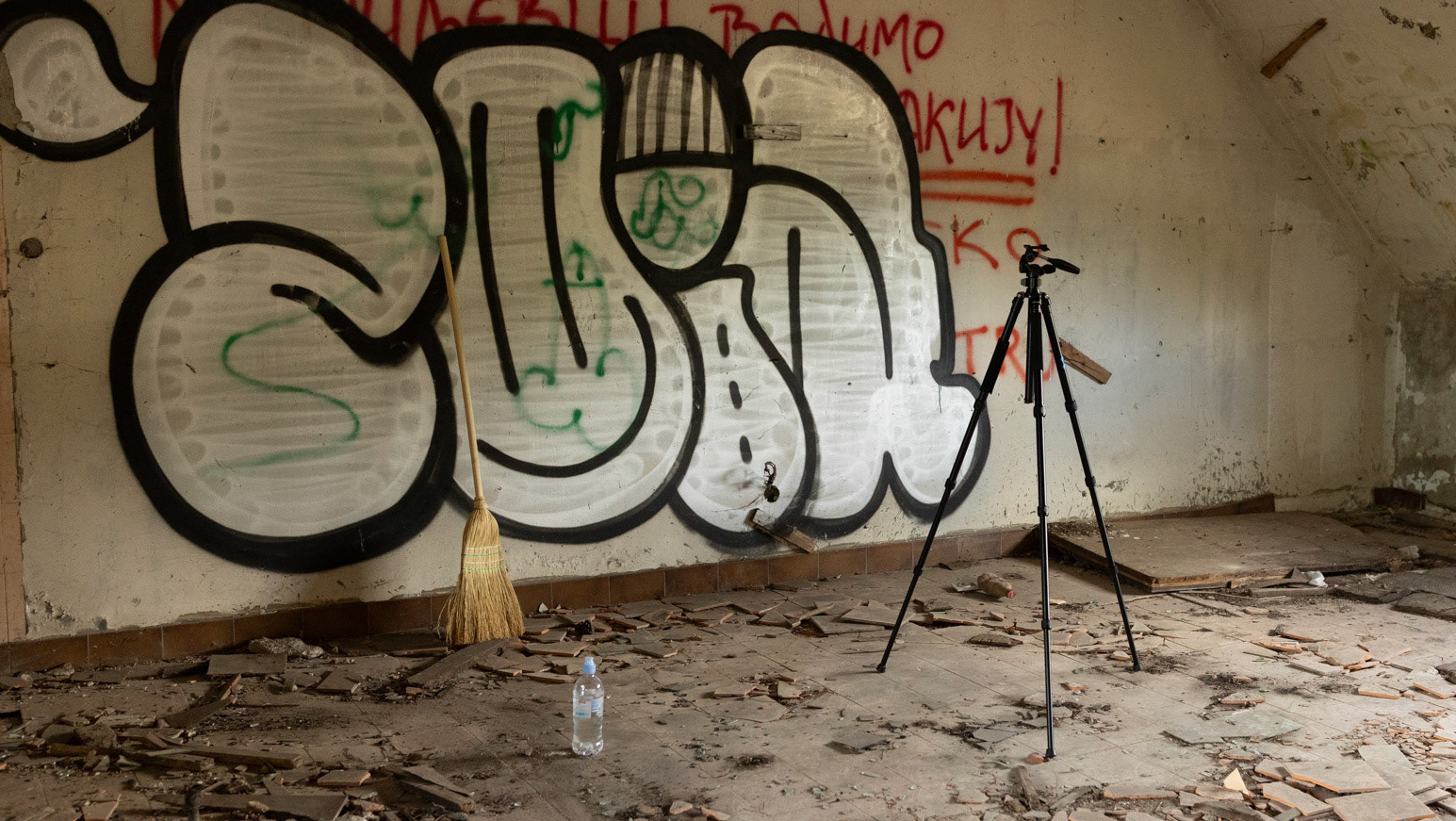
“Cleaning” combines video, sound, photography, and spatial installation into a work centred around a simple repetitive gesture: sweeping.
Originally developed as a site-responsive video performance in a landscape marked by the historical aftermath of war, the work approaches historical experience indirectly — not through reconstruction or documentary narration, but through bodily action, spatial tension, and gesture in dialogue with the memory embedded in the space itself.
The repetitive act of sweeping — a gesture suspended between mourning, repair, maintenance, and exhaustion. Performed by a female figure moving through a ruined architectural space marked by the historical aftermath of violence against women, the action evokes forms of labour historically associated with carrying, restoring, and enduring the social consequences of destruction.
What begins as an attempt to restore order shifts into a physically persistent yet unresolved condition, suspended between care and futility, presence and disappearance. The work does not approach bodily instability as an abstract formal strategy, but as a condition shaped by historical violence, displacement, and social inscription — forces capable of fragmenting identity while never fully extinguishing the impulse to continue, endure, and reassemble meaning.
Throughout the performance, the surrounding space remains active: collapsing architectural fragments, ambient noise, and the movement of birds passing through the open structure continuously interrupt the action. Rather than serving as background, the environment resists containment and becomes part of the work’s unstable emotional and historical atmosphere.
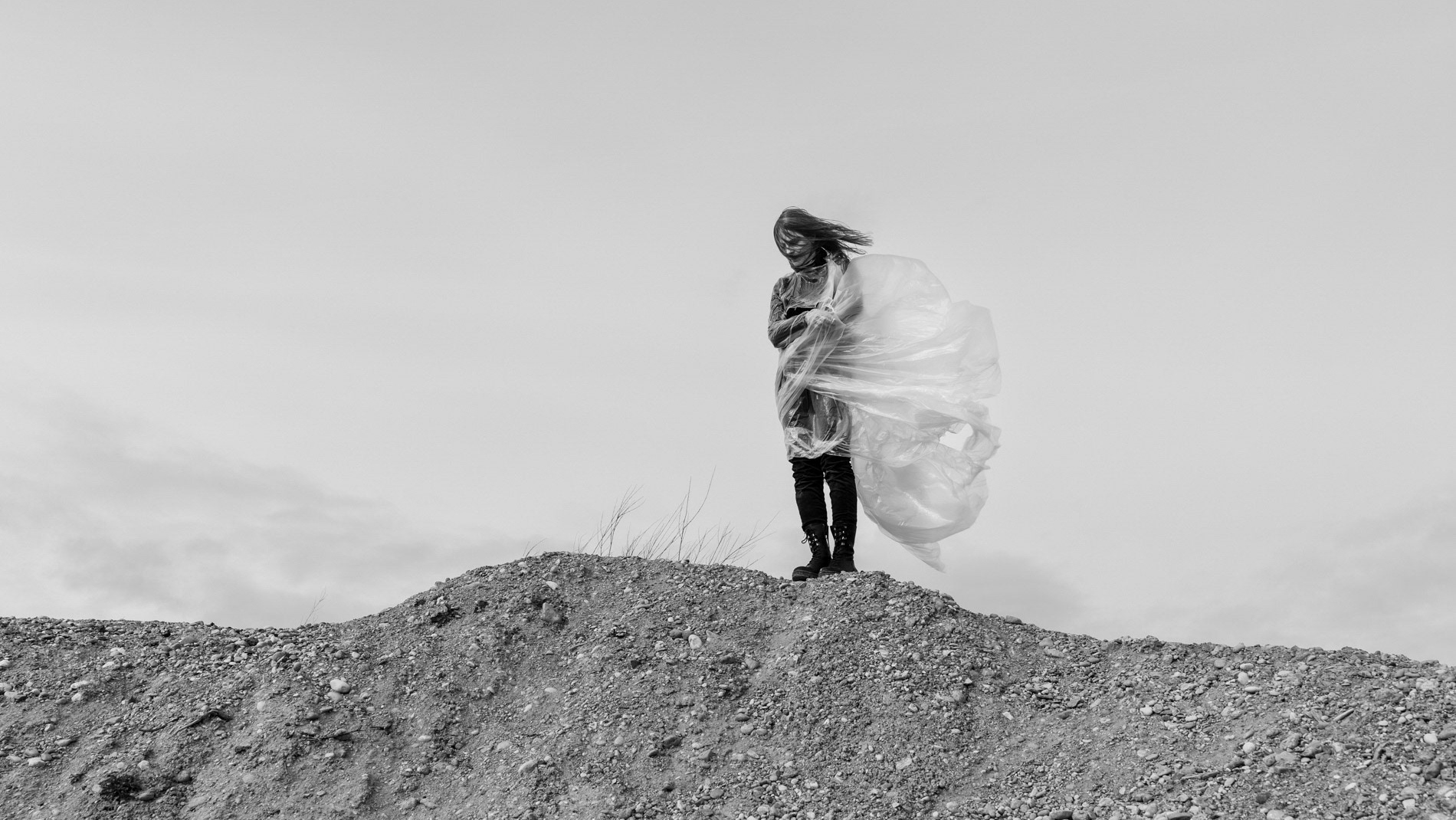
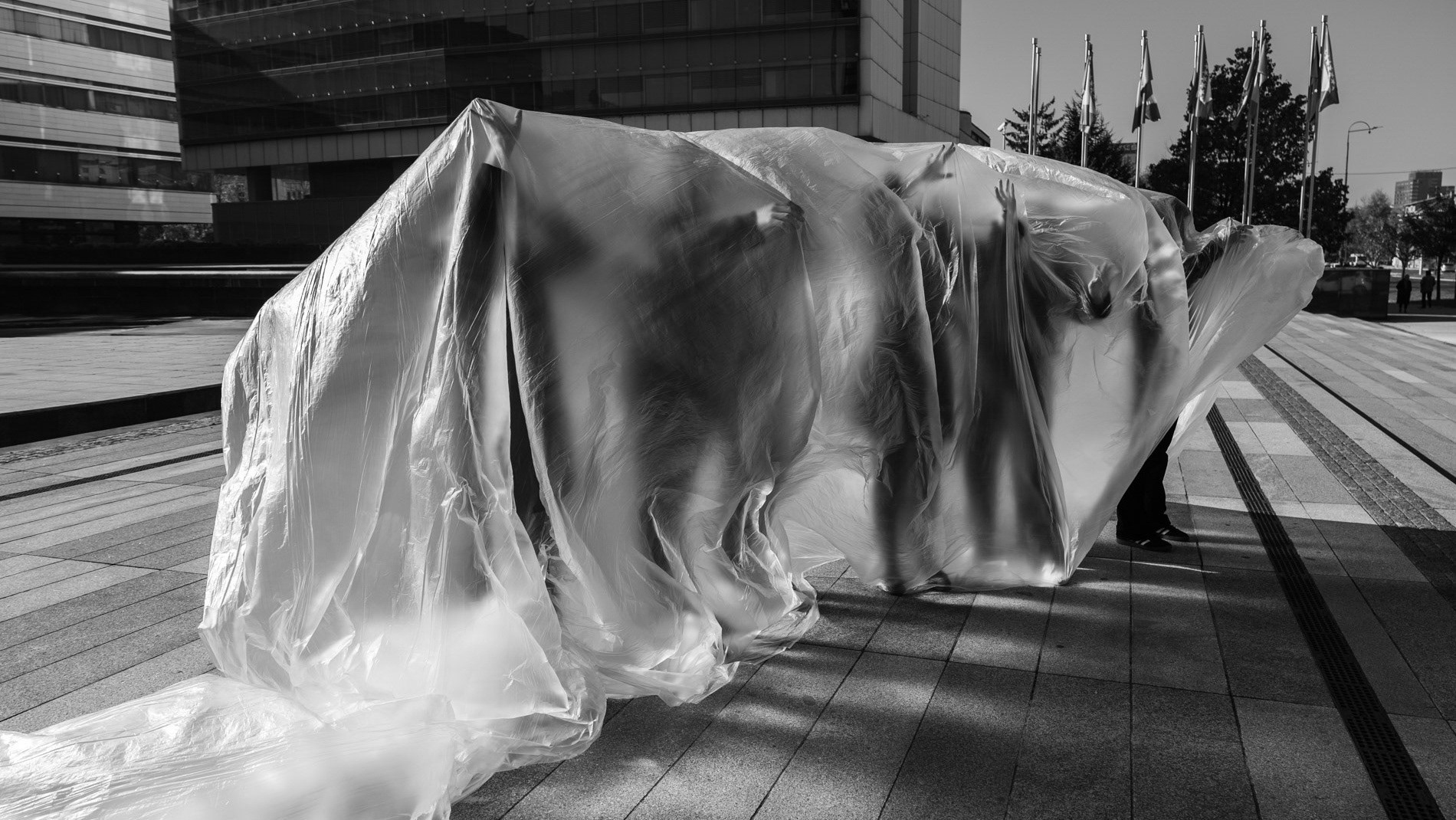
The photographic works function as autonomous fragments rather than illustrations of the video. Bodies appear partially concealed, absorbed into unstable terrains, dispersed within collective formations, or reduced to traces. Landscapes, abandoned architectures, and transitional spaces operate not as backgrounds, but as active spatial conditions in which bodily presence becomes fragile — shaped, fractured, and continuously reassembled under the pressure of historical violence, displacement, and social inscription.
Sound is separated from the projected image and installed independently within the space. Detached from a visible source, it creates a shifting perception in which action can no longer be fully localized. Through this spatial separation, “Cleaning” resists narrative closure and remains within a condition of unresolved historical and emotional tension.
Rather than offering symbolic resolution, “Cleaning” remains within fragile states of repetition, persistence, and historical tension. Yet within these unresolved conditions, gestures, sounds, and bodily actions continue to search for forms of presence, relation, and renewal.